TL;DR Summary
-
Low-voltage wiring carries 50V or less and powers business-critical systems like data/Ethernet (Cat5e/Cat6/Cat6a), VoIP, security, A/V, building automation, and fiber backbones.
-
A solid install follows a structured process: plan/design routes and endpoints, set up pathways (conduit/trays/racks), pull and terminate cables, label/document to TIA/EIA standards, then test for performance and signal quality.
-
Professional structured cabling improves reliability (less interference/downtime), scalability (easy adds and moves), organization/safety, and lower maintenance costs over time.
-
Common pitfalls include mixing high and low voltage improperly, using the wrong cable type, poor termination/labeling, skipping standards, and skipping testing, a qualified provider helps avoid these and keeps the infrastructure future-ready.
Low-voltage wiring plays a major role in keeping businesses connected, secure, and productive. Whether you’re building out a new office, upgrading your communications infrastructure, or installing security systems, low voltage cabling helps power the technologies you rely on every day.
Let’s break down what low voltage wiring is, how it works, and what you need to know to ensure a safe, future-ready installation.
What Is Low Voltage Wiring?
Low voltage wiring refers to electrical wiring that carries 50 volts or less. Unlike standard, high voltage systems that power lights and outlets, low voltage wire supports systems that need less power – such as internet, security, audio/visual, and communication technologies.
Because of its lower energy output, low voltage wiring installation follows different safety standards and installation practices than high-voltage electrical work. It also uses thinner cables, which require a more strategic layout to support long-term system performance and reliability.
Low Voltage Wiring Basics: What Businesses Need To Know
Understanding low voltage wiring basics can make it easier to plan or troubleshoot your building's network infrastructure. Here are some fundamentals:
Common Voltages
Most low voltage systems use 12V, 24V, or 48V power, depending on the equipment. These voltages are considered safer to work around, but they still require proper routing and labeling.
Cable Types
Low voltage wiring includes several different cable types, such as:
- Cat5e/Cat6/Cat6a: Used for Ethernet, VoIP, and data systems
- Coaxial Cable: Used for cable television and video feeds
- Speaker Wire: Used for intercoms and paging systems
- Security Wire: Used for alarms, door access, and cameras
- Fiber Optic Cable: Used for sending high-speed data over long distances
Choosing the right cable will depend on your system’s bandwidth needs, distance, and other environmental factors.
Labeling & Standards
Low voltage wiring must be labeled clearly and follow TIA/EIA standards. This helps with troubleshooting, future upgrades, and general cable management.
Where Is Low Voltage Cabling Used?
Low voltage cabling supports many systems that businesses rely on daily. Here are some of the most common use cases:
Network Infrastructure
All Local Area Network (LAN) cabling, which includes computers, phones, and access points to your property’s switch or router, is considered low voltage.
Security & Surveillance
Security cameras, card readers, alarms, and motion detectors all run on low voltage wiring, which must be designed to support both power and data transfer across your property.
Telecommunications
Phones, especially VoIP systems, depend on structured low voltage cabling for high-quality voice and seamless communication across departments or locations.
Audio/Visual Systems
Conference rooms, digital signage, paging systems, and intercoms use low voltage wiring for reliable performance and consistent sound or video quality.
Building Automation
Smart lighting, climate control, and other building automation systems use low voltage to reduce energy usage while keeping spaces comfortable and efficient.
How Does Low Voltage Wiring Installation Work?
Low voltage wiring installation follows a step-by-step process that focuses on long-term reliability and scalability. Here’s how it typically works:
Planning & Design
Before a single wire is pulled, installers assess your building layout, user needs, and future scalability. This includes mapping out wiring routes, identifying high-traffic tech zones, and determining cable types and termination points.
Infrastructure Setup
Once the plan is approved, the crew installs cable pathways – like conduits, cable trays, and racks – to ensure clean and organized routing of all low voltage wire.
Cable Pulling & Termination
Cables are pulled through the infrastructure and terminated at appropriate jacks, panels, or devices. Each termination is tested for performance and continuity.
Labeling & Documentation
Proper labeling makes it easier to manage your cabling over time. Professional installers document all connections, cable runs, and endpoints for future reference.
System Testing
Once everything is installed, systems are tested for speed, interference, and signal strength to confirm optimal performance.
4 Benefits Of Professional Low Voltage Wire Systems
Working with experienced low voltage professionals can make a big difference when installing a new electrical system. Here’s how:
1. Improved Performance
Professionally installed cabling reduces issues like signal degradation, downtime, and interference to help your systems run more smoothly and support better connection quality.
2. Scalability
Structured cabling makes it easier to expand your network. When you need to add more users, devices, or entire departments, your wiring is ready to support growth.
3. Aesthetics & Organization
Professionals use proper cable management techniques to keep everything neat and secure. This not only looks better but also reduces fire hazards or service delays.
4. Reduced Maintenance Costs
Well-organized systems are easier to troubleshoot and update, so your teams can spend less time on fixes and maintenance and more time staying productive.
Common Mistakes In Low Voltage Cabling
Avoiding a few common mistakes during low voltage wiring installation can help you save money, time, and frustration down the road:
- Mixing high and low voltage cables in the same conduit without proper shielding can cause interference.
- Using incorrect cable types for the application can lead to performance issues or early failure.
- Poor termination or missing labeling makes future repairs more difficult.
- Failing to follow standards can result in compliance problems or failed inspections.
- Skipping system testing can leave hidden issues that affect performance.
Partnering with a qualified structured cabling provider helps you avoid these issues and ensures your system is built for long-term success.
Low Voltage Wiring vs High Voltage: What’s The Difference?
While the name might sound like a minor distinction, there are big differences between low voltage and high voltage wiring systems. Here’s a quick breakdown:
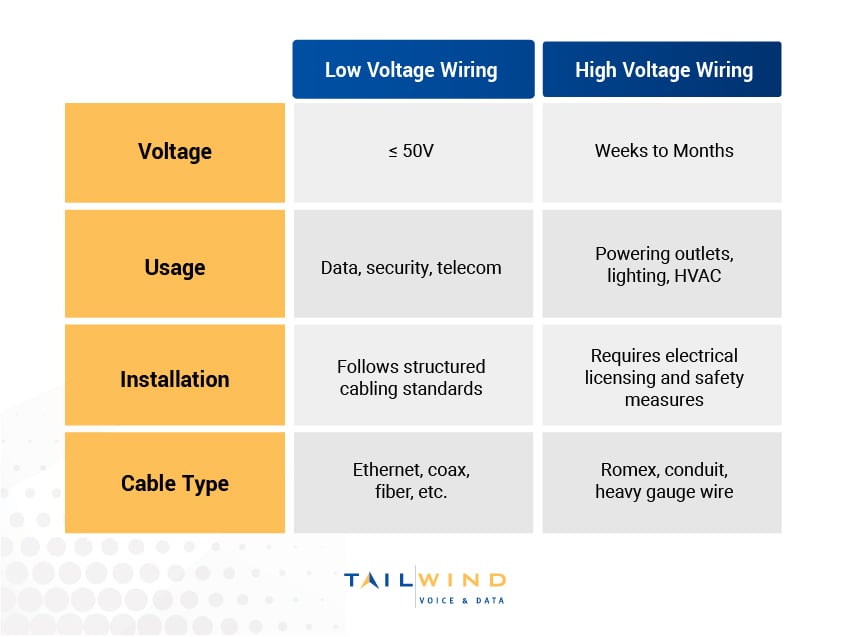
Both types of wiring are important for a functional building, but they support very different systems and follow separate safety standards.
Low Voltage Wiring FAQs
What Is Low Voltage Wiring In A House?
Low-voltage wiring (generally 50V or less) supports the systems that keep a building connected and secure, like Ethernet/LAN, VoIP phones, Wi-Fi access points, cameras, access control, alarms, A/V, and some building automation. It’s separate from the higher-voltage circuits that power lights and outlets.
How Does Low Voltage Wiring Work?
Low-voltage cabling carries either data signals (for network and communications) or low-voltage power, or both. For example, twisted-pair Ethernet carries data and may also deliver power using Power over Ethernet (PoE) to devices like phones and cameras, while fiber carries data as light for high speed and long distances.
Does Low Voltage Wiring Need To Be In Conduit?
Sometimes you do, sometimes you don’t. Conduit is typically used when you need extra physical protection, you’re routing cables through areas that require a raceway, or local code/specs call for it (common in exposed spaces, outdoors, or high-traffic areas). In many commercial installs, low-voltage cabling may instead run in cable tray, J-hooks, or structured pathways, as long as it’s properly supported and compliant. Always follow the requirements of your local authority having jurisdiction (AHJ).
How To Test Low Voltage Wiring?
Testing depends on the system. For data cabling (like Cat6), installers typically verify continuity, wiremap/pairing, and performance using a cable tester or certifier. For PoE-powered devices, they may also validate PoE delivery and confirm the endpoint operates as expected. The goal is to catch issues like mis-terminations, excessive loss, or interference before the network goes live.
Do I Need A Permit For Low Voltage Wiring?
It depends on where your building is and what you’re installing. Some jurisdictions require permits/inspections for certain low-voltage systems (especially anything life-safety related, like fire alarm), while others treat many low-voltage runs differently than line-voltage electrical work. The safest approach is to confirm requirements with your local AHJ (building department) or your structured cabling provider before work starts.
Should Low-Voltage Systems Be Maintained, Or Can You “Set It And Forget It”?
Maintenance is worth it, especially in multi-location environments. Periodic checkups help you spot damaged cables, loose terminations, labeling drift, crowded pathways, and performance issues before they cause outages, and they keep documentation accurate for moves/adds/changes.
Can Low-Voltage Wiring Be A DIY Project?
For very small, low-risk setups, some DIY work is possible, but commercial low-voltage is easy to get wrong in ways that create intermittent failures, poor performance, and troubleshooting headaches later. If you’re dealing with structured cabling, PoE device deployments, or security/access systems, working with a qualified installer is usually the fastest path to a reliable result (and may be required for compliance, depending on the project).
Build A Better Infrastructure With Structured Cabling From Tailwind
Low voltage wiring connects the tools, systems, and spaces your team relies on, often without being seen. But getting it right takes more than just running cables; it takes thoughtful planning, expert installation, and a clear understanding of how your technology fits together. Partnering with a structured cabling professional helps ensure your setup is not only reliable on day one but also built to support your business as it grows.
At TailWind, we help multi-location businesses design and deploy structured cabling systems that support your entire technology environment – from data and voice networks to security and building automation. Our network cabling experts offer unbiased advice and end-to-end accountability, so you can rest easier knowing your low voltage cabling system is built for long-term performance.
Need help with low voltage wiring? Contact us to learn how our structured cabling and field services can support your business from the ground up.