TL;DR
-
Fiber optic color codes are a standardized system under TIA/EIA-598-C that assigns each strand a color so technicians can match, splice, and trace fibers accurately.
-
The first 12 fibers follow a fixed color order that repeats in groups of 12, by buffer tube or ribbon, for cables carrying up to 144 strands or more.
-
A cable's outer jacket color signals the fiber type at a glance, with yellow for single-mode and orange, aqua, or lime green for multimode variants.
-
Consistent color coding speeds up splicing and troubleshooting across campus links, FTTH builds, and data centers while cutting down on crossed connections.
Fiber optic cables might seem like a tangle of colors to the untrained eye, but those colors are an important part of keeping your network organized and reliable. If you’re responsible for maintaining, installing, or troubleshooting fiber connections, knowing how to read and use fiber color codes is a skill you’ll rely on again and again.
In this guide, we’ll break down what the fiber optic color code is, why it matters, and how to use standard fiber color charts with confidence.
What Is A Fiber Optic Color Code?
A fiber optic color code is a standardized color system used to identify the individual fibers within a fiber optic cable. Each fiber strand is color-coded to help network technicians match, splice, and troubleshoot connections, which is especially important when you’re dealing with cables that contain dozens or even hundreds of fibers.
The most widely used color code standard in North America is TIA/EIA-598-C, which lays out clear guidelines for which colors to use and in what order. Both single-mode and multimode cables follow this system, so you can rely on the same approach across different types of fiber installations.
Why Are Fiber Colors Important In Network Infrastructure?
Fiber optic networks are usually deployed in multi-strand bundles. You might have 12, 24, or even 144 fibers working together just in a single run. Color codes make it simpler to:
- Match the right fibers during fusion splicing or when terminating connectors.
- Avoid crossed connections that can interrupt network performance.
- Identify the correct fibers during testing or troubleshooting.
- Maintain a clear, organized system as your network grows.
In short, using color coding can help techs maintain your networks faster and with fewer mistakes.
What Is The Standard Fiber Color Chart?
The TIA/EIA-598-C standard provides a specific color sequence for the first 12 fibers in a cable. These are:
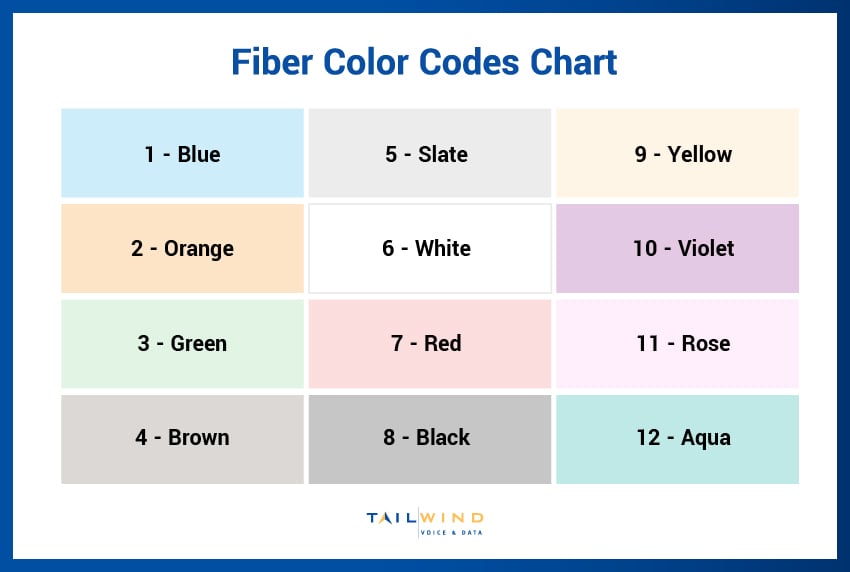
If a cable contains more than 12 fibers, the pattern simply repeats in groups of 12. These groups are usually organized in separate buffer tubes or ribbons, and each has its own color marker or identifier to tell them apart.
Buffer Tube Color Code
Cables with a loose tube design use color coding to identify the buffer tubes that house fiber strands. Each tube usually contains 12 fibers, and the tubes themselves will follow the same 12-color sequence.
Here’s an example:
- Blue buffer tube = fibers 1–12
- Orange buffer tube = fibers 13–24
- Green buffer tube = fibers 25–36
Using this layered color system makes it easier to keep track of every fiber in large cable runs during installation or repairs.
Ribbon Fiber Color Code
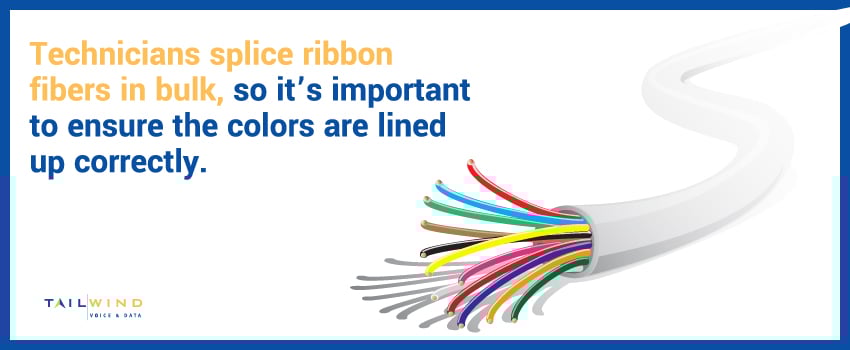
Ribbon fiber designs, which are used in many high-density installations, apply the 12-color code across a flat ribbon of fibers. Ribbons are stacked on top of each other and numbered to show their position, such as ribbon 1, ribbon 2, and so on.
Technicians often splice these ribbons in bulk, so it’s important to ensure the colors are lined up correctly.
Jacket Colors
Colors aren’t just important inside the cable. The outer jacket color of a fiber optic cable can also indicate the fiber type:
- Yellow: Single-mode fiber
- Orange: Multimode fiber (OM1, OM2)
- Aqua: Laser-optimized multimode fiber (OM3, OM4)
- Erika Violet or Lime Green: Higher-speed multimode fiber (OM4+/OM5)
This makes it easy to grab the right cable type at a glance, which is handy when you’re working in spaces with several different runs.
How Is Fiber Color Code Used In Real-World Installations?
Fiber color codes are a part of daily work in the field for network technicians. Here are a few examples of how color coding helps in real fiber deployments:
Between Campus Buildings
Outdoor cables used to connect buildings often include multiple buffer tubes and hundreds of fibers. The fiber optic color code helps field techs verify they’re splicing the correct tube and strand, which speeds up emergency repairs.
In FTTH Deployments
Fiber-to-the-home (FTTH) deployments use color coding to manage fiber distribution from the central office to customer premises. As more homes are connected, color codes ensure every link is correctly assigned and documented.
Inside A Data Center
Technicians rely on fiber color charts to trace connections between patch panels and server racks. When a link goes down, the right color combination helps them isolate the strand quickly without disrupting other network traffic.

5 Fiber Optic Color Code Best Practices
Make the most of your fiber optic color code strategy by keeping these best practices in mind:
- Label Everything: Use cable tags, panel labels, and documentation to reflect color assignments.
- Train Your Team: Make sure everyone understands the color chart and how to apply it.
- Stay Consistent: Use the same standard across every site and project to reduce confusion.
- Document Changes: Immediately update your diagrams and records whenever you modify or expand a network.
- Verify During Testing: Use visual fault locators and OTDR tools to confirm connections match your color-coded design.
Staying organized with fiber color codes doesn’t just help during installation; it also makes daily maintenance and future upgrades more efficient. When your team can quickly identify and trace each connection, they’ll spend less time searching for issues and more time keeping your network performing at its best.
Fiber Optic Color Code FAQs
What Is A Fiber Optic Color Code And How Does It Work?
A fiber optic color code is a standardized system that assigns a specific color to each fiber inside a cable, so technicians can identify, match, and splice the right strands. The colors follow a fixed sequence set by the TIA/EIA-598-C standard, which both single-mode and multimode cables use. When you open a cable, the color of each fiber tells you exactly which strand you're working with, even in bundles holding dozens or hundreds of fibers. That consistency is what makes splicing and troubleshooting faster and far less error-prone.
What Are The 12 Fiber Optic Cable Colors In Order?
The first 12 fibers follow this exact TIA/EIA-598-C sequence: blue, orange, green, brown, slate (gray), white, red, black, yellow, violet, rose (pink), and aqua. This order is the foundation of the entire system. For cables with more than 12 fibers, the same 12 colors simply repeat in the next group, organized by buffer tube or ribbon. Learning this sequence once means you can read almost any standards-compliant cable, whether it holds 12 strands or 144.
What Standard Defines The Fiber Optic Color Code?
The TIA/EIA-598-C standard defines fiber optic color coding in North America. It sets the 12-color sequence for individual fibers, the colors for buffer tubes, and the rules for how those colors repeat in higher-count cables. Because both single-mode and multimode cables follow the same standard, you can apply one consistent approach across different installations. Sticking to this standard across every site keeps your documentation reliable and prevents the crossed connections that slow down repairs.
What Color Are Single-Mode And Multimode Cables?
Jacket color tells you the fiber type at a glance. Yellow jackets indicate single-mode fiber, while orange marks multimode (OM1 and OM2). Aqua signals laser-optimized multimode (OM3 and OM4), and erika violet or lime green points to higher-speed multimode (OM4+ and OM5). These outer-jacket colors are separate from the color-coded strands inside the cable. When you're working in a space with several runs side by side, the jacket color makes it easy to grab the correct cable type without tracing it back.
How Do Color Codes Work Past 12 Fibers In A Cable?
Once a cable holds more than 12 fibers, the standard 12-color sequence repeats in groups of 12. Each group is separated into its own buffer tube or ribbon, with its own color marker so you can tell them apart. In a loose tube design, for example, the blue tube holds fibers 1 to 12, the orange tube holds 13 to 24, and the green tube holds 25 to 36. This layered system lets you track every strand in cables that run to 144 fibers or more during installation and repairs.
How Does Color Coding Work For Ribbon Fiber Cable?
Ribbon fiber applies the same 12-color code across a flat ribbon of fibers, used widely in high-density installations. The ribbons are stacked and numbered by position, such as ribbon 1, ribbon 2, and so on, so each layer is easy to identify. Technicians often splice these ribbons in bulk rather than one strand at a time, which makes correct color alignment essential. If the colors don't line up across stacked ribbons, you risk crossed connections that are tough to trace later.
Why Are Color Codes Important In Fiber Networks?
Color codes keep fiber networks organized, especially when a single run can carry 12, 24, or even 144 fibers. They let you match the right strands during fusion splicing, avoid crossed connections that interrupt performance, and pinpoint the correct fiber fast during testing or troubleshooting. In real deployments, that speed matters: field techs use color codes to splice the right tube between campus buildings, manage FTTH distribution, and isolate a failed link in a data center without disrupting other traffic. The result is faster maintenance and fewer mistakes as your network grows.
Simplify Your Fiber Projects With TailWind
Learning how to read and work with fiber optic color codes is an integral part of managing structured cabling. Whether you’re working with single-mode, multimode, or ribbon fiber, the right approach to color coding can help you save time, minimize errors, and keep your network running smoothly as it grows.
At TailWind, we design and install structured cabling solutions that help keep your technology working reliably across your entire enterprise. Our team handles everything from site assessments and planning to installation, labeling, and certification, so your network is set up for long-term success. Whether you’re adding fiber to a new location or upgrading your existing cabling, we deliver consistent, professional service nationwide.
Ready to start your next fiber project? Learn more about our structured cabling services or contact us today!