In the first quarter of 2024, organizations faced an average of 1,308 cyber attacks per week – a 5% increase year-over-year.1 With cyber threats constantly evolving, enterprise businesses need a comprehensive solution to gain visibility into network activities and proactively address attacks before they can do any damage.
Network traffic analysis (NTA) empowers businesses to monitor, analyze, and secure their network communications. By capturing and inspecting data packets as they traverse the network, NTA solutions provide insights into network traffic patterns, user behaviors, and threats to help IT teams take proactive measures to safeguard their organization's digital infrastructure.
Read on to learn everything business leaders need to know about network traffic analysis.
What Is Network Traffic Analysis?
Network traffic analysis tools monitor and analyze network communications to identify operational and security anomalies. Typical network traffic analysis processes include:
Data Capture
Network traffic analysis solutions capture network traffic data by monitoring network devices, switches, and routers or using techniques like port mirroring or network taps. Depending on the tool and configuration, this data can include packet headers, payloads, or metadata.
Data Analysis
The captured data is then analyzed using techniques such as pattern recognition, machine learning, and rule-based detection. This analysis helps security teams identify deviations from normal behavior, potential network security risks, bandwidth usage patterns, and other relevant information.
Alerting & Reporting
Network traffic analysis tools generate alerts and reports based on the analysis findings, which then notify network administrators of a security incident, performance issue, or policy violation. Reports provide detailed insights into user activity, traffic patterns, and historical network traffic data for further investigation or auditing purposes.
What Is The Purpose Of Traffic Analysis?
The primary goals of deploying a network traffic analysis tool include:
Automatic Anomaly Detection
Network traffic analysis helps IT teams detect and respond to potential network security threats, such as malware, unauthorized access attempts, and data exfiltration.
Network Performance Optimization
By analyzing network traffic, NTA solutions can identify bottlenecks, bandwidth hogs, and other performance issues to help businesses optimize their network resources.
Ensuring Compliance
Network traffic analysis tools provide the necessary visibility and reporting capabilities to help businesses meet regulatory requirements related to network security and data privacy.
Network Troubleshooting
Network traffic analysis can assist IT teams in identifying and resolving network-related problems, such as connectivity issues, application performance degradation, and misconfigured network devices.
Top 5 Benefits Of Network Traffic Analysis
Network traffic analysis solutions offer several benefits for businesses, including:
Improved Visibility
75% of businesses believe better network visibility would help them improve network security.2 The network traffic analysis tool provides better visibility into network activities, enabling enterprise businesses to monitor and analyze traffic patterns, user behaviors, and potential threats across their entire network infrastructure, including cloud environments and remote connections.
This visibility helps IT teams identify and address potential issues proactively rather than reactively. With network traffic analysis, businesses can gain insights into network traffic patterns, application usage, and user behavior to make informed decisions about network optimization, security policies, and resource allocation.
Stronger Security Posture
By analyzing network traffic for anomalies and potential threats, network traffic analysis solutions help companies detect and respond to security threats more effectively. Network traffic analysis tools can detect abnormal traffic patterns, unauthorized access attempts, and potential data exfiltration incidents, allowing businesses to take prompt action to mitigate the threat. Additionally, network traffic analysis can help IT teams identify vulnerabilities in the network infrastructure and address them before they can be exploited by bad actors.
Better Network Performance
A network traffic analysis tool can help organizations optimize their resources and ensure seamless connectivity for critical applications and services. By analyzing network traffic patterns, NTA solutions determine which applications or users are consuming excessive bandwidth so organizations can prioritize traffic or implement traffic-shaping policies. Network traffic analysis can also help identify configuration issues or hardware failures that may be causing network performance issues.
Easier Troubleshooting
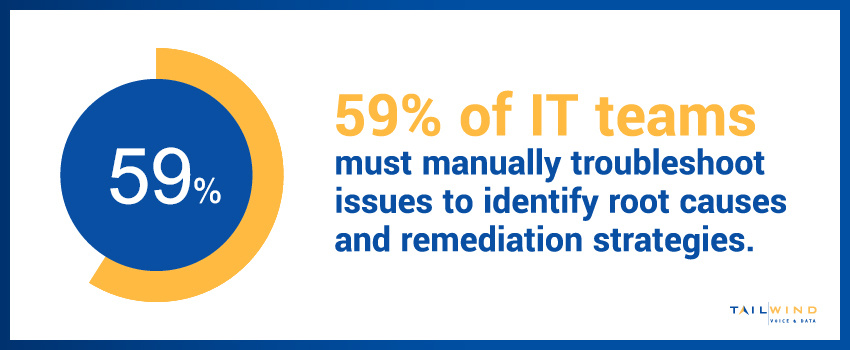
59% of IT teams must manually troubleshoot issues to identify root causes and remediation strategies.3 With the insights provided by a network traffic analysis tool, IT teams can more easily diagnose and resolve network-related issues. Network traffic analysis software provides IT teams with a comprehensive view of network traffic, allowing them to identify the root cause of performance issues or connectivity problems quickly. This significantly reduces the time and effort required to troubleshoot and resolve network-related issues, improving overall IT efficiency and productivity.
Meet Compliance
Many industries have strict regulations regarding data privacy, security, and network monitoring. Network traffic analysis solutions help companies meet these compliance requirements by providing network visibility and auditing capabilities. A network traffic analysis tool helps demonstrate compliance with industry regulations by providing detailed logs and reports on network traffic and security incidents.
Additionally, network traffic analysis can help organizations detect and respond to potential compliance violations, such as unauthorized access to sensitive data or unauthorized data transfers.
Real-World Network Traffic Analysis Use Cases
In day-to-day operations, network traffic analysis gives IT and security teams answers to very practical questions: Who is talking to what, is this behavior expected, and does it put the business at risk? A few common use cases stand out across enterprise environments.
Stopping Ransomware & Other Advanced Threats
Ransomware rarely appears out of nowhere. Before data is encrypted, compromised systems usually scan the network, attempt lateral movement, or reach out to command-and-control infrastructure. NTA makes these early steps visible by highlighting suspicious internal connections, unusual file-share access, or unexpected outbound traffic. With that insight, teams can isolate affected hosts and contain the issue before it becomes a full-blown outage.
Blocking Data Exfiltration & DNS Tunneling
Once attackers gain a foothold, their next goal is often to move data out of the organization quietly. By tracking outbound volumes, destinations, and patterns over time, NTA helps spot behavior that doesn’t match normal business use, such as large transfers to new external endpoints or long-lived connections with irregular traffic. When DNS is used as a covert channel, careful inspection of DNS traffic can also reveal tunneling techniques that traditional controls might miss.
Managing Unmanaged & IoT Devices
Most enterprises now run a mix of laptops, mobile devices, smart TVs, cameras, printers, and other IoT hardware. Many of these devices are difficult to manage with traditional endpoint tools, but they still generate network traffic. NTA gives IT teams a way to discover these endpoints based on their behavior, understand which services they are accessing, and quickly spot devices that are using outdated protocols or communicating in unexpected ways.
Protecting Critical Applications & Data
For regulated workloads and high-value applications, NTA provides an additional layer of assurance. By watching who connects to key databases, file servers, and business applications, and how that access evolves, organizations gain a clearer view of whether usage matches job roles and policies. Anomalous access attempts, spikes in data retrieval, or new internal paths to sensitive systems all become signals that warrant closer investigation.
Supporting Compliance & Investigations
When something does go wrong, the historical view provided by NTA accelerates investigations. Teams can reconstruct how a session started, which systems were involved, and what traffic moved between them. That evidence helps satisfy auditors, respond to regulators, and refine controls so similar incidents are less likely in the future.
How Do Network Traffic Analysis Tools Work?
Network traffic analysis tools capture and analyze network traffic data from various sources. Here's a general overview of how these tools operate:
- Network traffic analysis tools capture network data by monitoring network interfaces, switches, and routers or using techniques like port mirroring or network taps.
- The captured data is preprocessed and normalized to ensure consistency and compatibility with the analysis engine.
- The processed data is then analyzed using pattern recognition, machine learning algorithms, and rule-based detection to identify deviations from normal behavior, potential security threats, network usage patterns, and other relevant information.
- Based on the findings, network traffic analysis software generates alerts to notify administrators of potential security incidents, network performance issues, or policy violations. It also creates reports that provide detailed insights into network activity, traffic patterns, and historical data for further investigation or auditing purposes.
Advanced network traffic analysis tools may also include features like anomaly detection, user behavior analytics, and integration with other security tools like Security Information and Event Management (SIEM) systems for a more comprehensive security solution.
Key Data Sources For Network Traffic Analysis
Network traffic analysis is only as strong as the data it can see. In practice, most solutions rely on two main data sources, flow records and packet data, often combined for a more complete picture of what is happening on the network.
Flow-Based Monitoring
Flow records, such as NetFlow, sFlow, or IPFIX, summarize conversations between devices on the network. Instead of capturing every bit in a packet, they describe who talked to whom, for how long, using which protocol, and how much data was exchanged.
Flow data is lightweight and scalable, which makes it ideal for:
- Understanding traffic volumes between key locations or services
- Identifying unusual spikes in activity between endpoints
- Mapping the path of traffic across wide area networks
Because flow records do not include full payloads, they are less detailed for deep forensic investigations. For many organizations, however, they provide an efficient way to gain broad visibility into network behavior without overwhelming storage or processing resources.
Packet-Based Monitoring & Deep Packet Inspection
Packet capture solutions observe the actual packets as they traverse the network. Deep packet inspection (DPI) tools then analyze these packets to extract protocol details, application information, and security signals.
Packet-based monitoring helps IT and security teams:
- See application behavior at a granular level
- Identify protocol misuse or unsafe configurations
- Investigate suspicious sessions with more context
This approach delivers richer detail but also requires more storage, compute, and specialized expertise. As a result, many organizations target packet capture at critical segments, such as data centers or high-value applications, rather than the entire environment.
Balancing Detail, Cost & Complexity
Most enterprise NTA strategies combine flow and packet data. Flow records provide wide coverage and trend visibility, while packet data is reserved for key locations where deeper analysis is needed.
When designing an NTA deployment, IT leaders should:
- Decide where broad flow visibility is sufficient
- Identify network segments where packet-level detail is essential
- Plan storage and retention policies that support both performance and security requirements
This balanced approach keeps costs manageable while still delivering the insight needed for performance, security, and compliance.
Core Network Traffic Analysis Techniques
Modern NTA platforms rely on several complementary analysis techniques to turn raw network data into actionable insight. Understanding these methods makes it easier for IT and security teams to interpret alerts and tune detection policies.
Behavioral Analysis
Behavioral analysis focuses on how the network normally operates. The solution builds baselines for users, devices, and applications, then monitors live traffic for deviations from those patterns.
Examples include:
- Unusual connection times or destinations
- Sudden increases in data transfers
- New communication paths that have not been seen before
By comparing current activity against expected behavior, NTA tools can surface subtle early-stage threats that might not match known signatures.
Protocol Analysis
Protocol analysis examines the way communication protocols such as HTTP, DNS, SMB, or FTP are used across the network. Even when payloads are not visible, protocol patterns can reveal misconfigurations or suspicious activity.
For example, repeated SMB connections to multiple servers may indicate lateral movement, while abnormal DNS requests can suggest command-and-control activity or tunneling attempts.
Statistical Analysis
Statistical analysis looks at traffic volumes, packet sizes, error rates, and protocol distributions over time. Changes in these metrics can indicate congestion, misrouted traffic, or emerging performance issues.
For security teams, statistical anomalies often serve as a first sign that something is wrong, prompting deeper investigation with other techniques.
Payload Analysis
When policies and regulations allow packet inspection, payload analysis reviews the content of network packets at the application layer. This can reveal:
- Suspicious file transfers
- Policy violations involving sensitive data
- Malicious patterns embedded in traffic
Payload inspection is typically targeted at specific segments or use cases where deep visibility delivers clear security or compliance value.
Flow Analysis
Flow analysis connects these techniques by examining the conversations between endpoints over time. It helps teams understand:
- Which devices are communicating
- How traffic moves through the network
- Where unusual or unauthorized pathways appear
Together, these analysis methods allow NTA solutions to detect threats, validate configurations, and support informed decision-making about network changes.
Monitoring North–South & East–West Traffic
Modern networks no longer have a simple “inside” and “outside.” Users, applications, and data live in branch offices, data centers, and the cloud. To keep pace, network traffic analysis must look at how traffic flows both across the perimeter and within internal segments.
Understanding North–South Traffic
North–south traffic refers to data that moves into or out of the organization, such as users accessing internet services, cloud applications, or partner environments. Monitoring this traffic with NTA helps validate that perimeter controls are doing what they should. Teams can see whether firewall rules are effective, identify risky destinations that users are contacting, and track how critical services are being consumed from outside the network.
Understanding East–West Traffic
East–west traffic is the communication that happens inside the network between servers, applications, and internal services. This is where lateral movement occurs when an attacker compromises one system and then explores the environment. By providing visibility into east–west flows, NTA makes it easier to see unexpected connections between segments, unusual access to file shares or databases, and other signs that a host may be behaving outside of its normal profile.
Why Both Directions Matter
Relying solely on perimeter telemetry leaves significant blind spots. An attacker who bypasses or evades gateway controls can move quietly between systems without triggering traditional alerts. When NTA monitors both north–south and east–west traffic, organizations gain a continuous view of how threats might enter, spread, and attempt to exfiltrate data. That combined perspective is a key ingredient in modern detection and response strategies.
6 Important Factors When Evaluating NTA Tools For Your Business
When evaluating network traffic analysis solutions for your business, consider these factors:
Coverage
The network traffic analysis solution should provide comprehensive visibility into the entire network infrastructure, including cloud environments, remote connections, and IoT devices. It should be able to capture and analyze network traffic from various sources, such as switches, routers, and network taps. This visibility can help your network administrators gain a complete picture of network activities, enabling them to identify and address potential issues across their entire network infrastructure.
Advanced Analytics & Threat Detection
Look for NTA solutions that offer advanced analytics capabilities to help your teams detect sophisticated cyber threats like zero-day attacks and advanced persistent threats (APTs), which may evade traditional signature-based detection methods. Additionally, user behavior analytics can help identify insider threats or compromised accounts by detecting deviations from normal network behavior patterns.
Ease Of Use
The network traffic analysis solution should have a user-friendly interface and offer easy integration with your existing security tools, such as SIEM systems, firewalls, and intrusion detection systems, for a more complete security approach. A user-friendly interface can help your administrators quickly identify and respond to potential issues, while integration with other security solutions can provide a more holistic view of your organization's security posture.
Scalability & Performance
The network traffic analysis solution should be able to scale without compromising performance or accuracy as your networks grow and traffic volume increases. Look for NTA solutions that can handle increasing network traffic volumes and accommodate the addition of new devices without degrading network performance or accuracy. It should also be able to process and analyze network traffic data in real time to ensure your staff can quickly identify and respond to potential issues.
Compliance
Your network traffic analysis solution should provide detailed reporting capabilities to meet compliance requirements and allow effective auditing and forensic analysis. Look for an NTA solution that offers customizable reporting templates, allowing them to generate reports tailored to their specific compliance requirements. Additionally, the solution should provide detailed logs and audit trails to support forensic analysis and incident investigations.
Ongoing Support
Consider the vendor's track record, support offerings, and regular software updates to ensure your NTA solution remains up-to-date and effective against evolving threats. Look for NTA providers with a proven track record of delivering responsive support and regular software updates to address any new threats and vulnerabilities.
Where Network Traffic Analysis Fits In Your Security Architecture
Network traffic analysis is most effective when it is treated as part of a broader security strategy, not a standalone tool. It complements existing investments and strengthens the organization’s ability to detect, investigate, and respond to threats.
Enabling Zero Trust In Practice
Zero trust frameworks rely on continuous verification: every user, device, and application must prove that its behavior is appropriate for the level of access it has been granted. NTA brings real network behavior into that conversation. By comparing observed traffic with intended segmentation and access policies, teams can confirm whether controls are working and quickly spot exceptions, such as a workload reaching out to a segment it should never touch.
Powering Network Detection & Response
Network detection and response (NDR) solutions use network-centric telemetry to find advanced threats and support incident response. NTA is the foundation of that telemetry. When a suspicious pattern is detected, NTA data shows where it started, how it moved, and which systems participated in the communication. That context helps security teams decide how urgent the situation is and where to focus containment efforts first.
Working Alongside SIEM, Endpoint & Identity Tools
Most enterprises already aggregate logs in a SIEM, deploy endpoint protection, and manage user access through identity platforms. NTA adds a perspective those tools cannot provide on their own: how everything actually talks on the wire. When NTA findings are correlated with log events, endpoint alerts, and authentication data, individual signals start to form a complete picture. Analysts can trace an event from an initial login through the systems accessed and the data transferred, which shortens investigation time and improves the quality of response.
Top 10 Best Practices Of Network Traffic Analysis
To maximize the benefits of network traffic analysis, implement the following best practices:
Define Clear Objectives & Policies
Establish clear objectives for implementing network traffic analysis, such as improving cyber security, optimizing performance, or meeting compliance requirements. Develop and enforce policies and procedures that clearly define roles and responsibilities for network monitoring, incident response, and data handling.
Deploy Sensors Strategically
Place network traffic analysis sensors at critical points in the network, such as internet gateways, data centers, and network segments that handle sensitive or mission-critical traffic, to ensure complete visibility. Carefully consider the placement of sensors to make sure they can capture and analyze network traffic from all relevant network segments and devices. You should also regularly review your sensor deployment to ensure it remains effective as the network infrastructure evolves.
Integrate With Other Security Tools
Consider integrating the network traffic analysis solution with other security tools, such as SIEM systems, firewalls, and intrusion detection/prevention systems, for a more streamlined incident response. You can correlate data from multiple sources by integrating network traffic analysis with other security tools to enable more effective threat detection and incident response. This integration can also help automate certain security processes, such as generating alerts or initiating remediation actions based on the network data.
Regularly Review & Optimize
Continuously review and optimize the network traffic analysis solution's configurations, rules, and policies to ensure they align with your company's evolving network requirements, threat landscapes, and compliance regulations. This may include updating detection rules, adjusting network traffic baselines, or modifying alert thresholds.
Train & Educate Staff
To ensure effective utilization and incident handling, provide regular training and education for IT and security teams on the network traffic analysis solution's capabilities, best practices, and incident response procedures. Training should cover topics such as interpreting network data, configuration, and responding to potential incidents or issues identified by the solution.
Implement Automation & Orchestration
Many modern network traffic analysis tools offer automation and orchestration features that can help organizations streamline their security processes. For example, automated workflows can be configured to initiate remediation actions or generate alerts based on specific network data patterns, reducing the need for manual intervention and improving response times.
Establish Clear Baselines & Thresholds
Define what normal network behavior looks like across users, applications, and locations. Use this baseline to set practical thresholds for alerts, so your teams can focus on meaningful deviations rather than being overwhelmed by noise. Revisit these baselines regularly as new services are rolled out or usage patterns change.
Prioritize Critical Assets & Segments
Not every part of the network carries the same business impact. Identify the applications, data stores, and network segments that are most critical to operations or compliance, and apply more granular monitoring and tighter alerting thresholds there. This ensures NTA efforts are aligned with the areas that matter most to the business.
Test & Refine Incident Response Playbooks
Use insights from your network traffic analysis solution to build and rehearse incident response playbooks. Walk through scenarios such as suspected ransomware, data exfiltration, or an insider threat, and confirm that teams know how to leverage NTA data to trace activity, contain affected systems, and document the response.
Align NTA Metrics With Business KPIs
Connect NTA outcomes to the metrics business leaders already track, such as application availability, user experience, and regulatory audit results. When network visibility is framed in terms of faster troubleshooting, fewer outages, and smoother compliance reviews, it becomes easier to secure ongoing support and investment for your NTA strategy.

Network Traffic Analysis (NTA) FAQs
Is Network Traffic Analysis The Same As A Firewall Or IDS?
No. Firewalls and intrusion detection systems focus primarily on blocking or alerting on specific traffic at the perimeter. Network traffic analysis provides broader visibility into how users, applications, and devices communicate across the entire environment, both inside and outside the network edge.
Do I Need Both Flow Data And Packet Data For Effective NTA?
Not every organization needs full packet capture everywhere, but combining flow data and targeted packet visibility delivers the best balance of coverage, detail, and cost. Flows provide broad insight into who is talking to whom, while packet data supports deeper investigations when needed.
Can NTA Work In Cloud And Hybrid Environments?
Yes. Modern NTA solutions can ingest telemetry from on-premises networks, public cloud environments, and hybrid architectures. The goal is to maintain consistent visibility across data centers, branch locations, remote workers, and cloud-hosted applications.
How Does NTA Help With Compliance Requirements?
NTA supports compliance by providing detailed records of network activity, helping organizations demonstrate how data moves, who accessed key systems, and how incidents were handled. These records can be used during audits and to validate that security controls are working as designed.
Will Network Traffic Analysis Impact Network Performance?
When designed and deployed correctly, NTA has minimal impact on network performance. Most solutions rely on passive collection methods, such as SPAN ports or taps, and are sized to handle expected traffic volumes without introducing noticeable latency.
How Do I Know If My Organization Is Ready For NTA?
If your teams struggle to understand why an issue occurred, how a threat moved, or which users and applications were affected, you are likely ready for NTA. Organizations with complex networks, heavy cloud adoption, or strict compliance requirements typically see strong value from deploying network traffic analysis.
Elevate Your Business With Enterprise Network Traffic Monitoring
With the increasing complexity of enterprise networks, rising adoption of cloud and remote work, and ever-evolving cyber security threats, network traffic analysis solutions have become indispensable for businesses of all sizes.
Tailwind provides a suite of services designed to help multi-location enterprises manage and monitor their complex network infrastructure. Our NOCaaS solution leverages network traffic analysis and monitoring capabilities to solve your network problems quickly – or help you avoid them altogether. Reach out to TailWind today to get started with a NOC solution designed to overcome your enterprise IT challenges.
Sources: