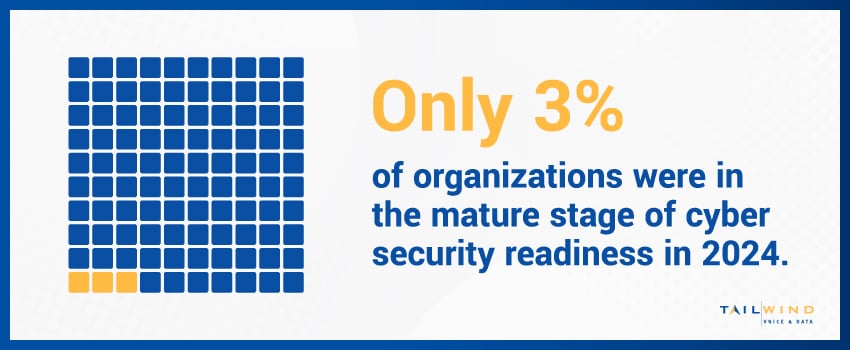
Cyber threats are evolving, making it more important than ever for businesses to ensure their IT infrastructure remains secure. Unfortunately, only 3% of organizations were in the mature stage of cyber security readiness in 2024,1 according to the latest Cisco Cybersecurity Readiness Index.
IT security audits offer a structured approach to evaluating your organization's overall security posture. These evaluations have become an essential component of a robust security strategy as the digital landscape grows more complex – but what exactly are security audits, and how can they strengthen your cyber security posture? Read on to find out.
TL;DR
-
An IT security audit evaluates your systems, policies, and controls to uncover vulnerabilities, strengthen defenses, and support compliance.
-
Security audits differ from vulnerability assessments and penetration tests, but all three can work together to improve your security posture.
-
A strong audit includes clear scope, thorough testing, practical reporting, and actionable remediation steps.
-
With regular audits and proper preparation, businesses can reduce risk, improve resilience, and better protect critical data and operations.
What Is An IT Security Audit?
An IT security audit examines your organization's network, systems, and policies from top to bottom. Think of these as health check-ups for your digital infrastructure. They help you identify potential vulnerabilities, compliance issues, and gaps in your security strategy.
IT Security Audit vs Vulnerability Assessment vs Penetration Test
Although these terms are often used interchangeably, they do not mean the same thing. Each serves a different purpose, and understanding the difference can help your organization choose the right approach for its security goals.
IT Security Audit
An IT security audit provides a broad evaluation of your organization’s overall security posture. It reviews systems, policies, controls, configurations, and processes to identify weaknesses, compliance gaps, and opportunities for improvement.
This type of assessment helps organizations understand whether their security practices are aligned with business needs, industry expectations, and regulatory requirements.
Vulnerability Assessment
A vulnerability assessment focuses on identifying known weaknesses in your IT environment. These assessments typically use automated tools to scan systems, networks, and applications for issues such as outdated software, missing patches, or misconfigurations.
Vulnerability assessments can be useful for ongoing monitoring, but they do not usually show how an attacker could exploit those weaknesses in a real-world scenario.
Penetration Test
A penetration test goes a step further by actively attempting to exploit identified vulnerabilities. This helps organizations understand how far an attacker could go if a weakness were left unresolved.
Penetration testing can reveal the real-world impact of security gaps, but it is typically narrower in scope than a full IT security audit.
Which One Does Your Business Need?
In many cases, organizations benefit from all three. A security audit gives you the big-picture view, a vulnerability assessment helps uncover known weaknesses, and a penetration test shows how those weaknesses could be exploited.
Together, these assessments can provide a more complete understanding of your security posture and help your IT team prioritize the right next steps.
Why Are IT Security Audits Important?
Regular IT security audits can help your organization:
- Identify security gaps before they can be exploited by cyber criminals.
- Maintain compliance with industry standards and regulations.
- Strengthen network security by improving policies, configurations, and access controls.
- Reduce financial risks by preventing data breaches and downtime.
- Improve incident response readiness by finding weaknesses in security protocols.
Failing to conduct security audits can put your business at risk of data breaches, regulatory fines, or damage to your reputation that could take years to repair.
Types Of IT Security Audits
Different security audits examine different parts of your IT infrastructure. The most popular types of IT security audits include:
Network Security Audit
A network security audit evaluates how well your network architecture protects your data. It includes checking firewalls, routers, switches, and who has access to what within your system.
Network security audits also check your wireless network security, VPN configurations, and network segmentation strategies to ensure sensitive data is isolated from general network traffic. These assessments often include penetration testing to simulate real-world attack scenarios.
Compliance Audit
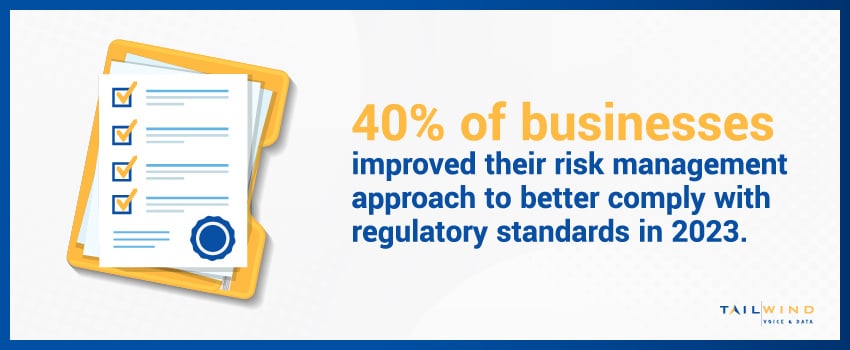
A 2023 survey found that 40% of businesses improved their risk management approach to better comply with regulatory standards.2 If your organization must meet specific industry regulations like SOC 2, GDPR, HIPAA, or PCI-DSS, a compliance audit can help ensure you're following them correctly.
During a compliance audit, auditors review documentation, interview staff members, and examine system configurations to verify adherence to regulatory requirements. They also assess your company’s ability to maintain compliance over time through established policies and procedures.
Information Security Audit
An information security audit focuses on protecting your data and digital assets. Auditors examine how your organization encrypts information, stores sensitive data, and manages who can access it. They’ll also evaluate your data classification systems, retention policies, and destruction procedures to ensure compliance with privacy regulations.
Operational Security Audit
An operational security audit examines your day-to-day security operations, including employee access controls, password policies, and incident response plans. It also reviews physical security measures, employee training programs, and vendor management processes to ensure comprehensive security coverage. These audits often reveal gaps between written policies and actual practices that need to be addressed.
Cloud Security Audit
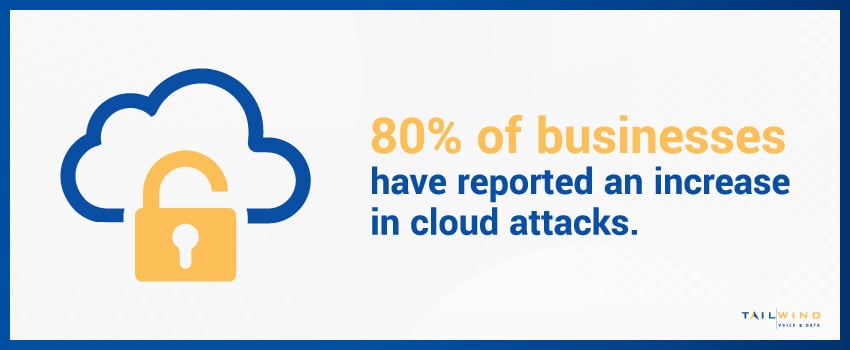
Cloud security audits have become increasingly important, as 80% of businesses have reported an increase in the frequency of cloud attacks they’ve faced.3 These audits assess how secure your cloud setup is and examine risks from third-party vendors.
Cloud security audits look at data encryption in transit and at rest, access controls, and integration points between cloud services and on-premises systems. They also evaluate your cloud provider's security certifications to make sure they align with your organization's requirements.
What Is A Common IT Security Audit Process?
A thorough IT security audit follows a structured approach to identifying vulnerabilities and strengthening security policies. Here’s what occurs during a typical audit:
1. Define Audit Objectives & Scope
Before conducting an IT security audit, you’ll need to define:
- Which systems and networks need to be assessed
- What compliance standards apply
- Which security threats deserve special attention
Setting clear objectives helps everyone understand what the audit should achieve and ensures no critical areas are overlooked.
2. Assess Security Policies & Procedures
Auditors will carefully review your existing security policies to ensure they align with best practices. This involves comparing factors like password policies, data encryption standards, and access controls against what experts recommend for your industry.
3. Identify Vulnerabilities
The audit team uses various tools and methods, such as automated security scans, penetration testing, and manual assessments, to pinpoint vulnerabilities. Common security gaps include misconfigured firewalls, outdated software, and weak authentication protocols.
4. Test Incident Response & Disaster Recovery Plans
Your organization must be prepared for issues like cyberattacks, system failures, and data breaches. Auditors review your incident response plans and test how effectively your teams can detect, contain, and recover from any threats that arise.
5. Review Compliance Requirements
If your business must follow specific rules like GDPR or HIPAA, auditors will confirm that your security measures align with all legal and regulatory guidelines – including data encryption, logging policies, and third-party security measures.
6. Provide Recommendations & Remediation Strategies
Following the security audit, your auditing team should provide a detailed audit report outlining vulnerabilities and recommended solutions. These expert recommendations include strategies for fixing critical security gaps, updating security policies, and implementing cybersecurity awareness training programs.
What Should An IT Security Audit Report Include?
The audit itself is only part of the process. To create real value, your organization needs a clear, actionable report that explains what was found, what it means, and what should happen next.
A strong IT security audit report should help both technical and non-technical stakeholders understand your current security posture and where improvements are needed most.
Executive Summary
An executive summary gives leadership a high-level overview of the audit’s scope, major findings, and overall security posture. This section should clearly communicate the most important risks without overwhelming readers with technical detail.
Detailed Findings
This section outlines the vulnerabilities, misconfigurations, policy gaps, or control weaknesses discovered during the audit. Each finding should explain what the issue is, where it exists, and why it matters to the business.
Risk Prioritization
Not every issue carries the same level of risk. A useful audit report prioritizes findings based on severity, likelihood, and business impact so your organization can focus first on the most critical problems.
Compliance Gaps
If your business must meet standards such as HIPAA, PCI-DSS, GDPR, or SOC 2, the report should identify any areas where current controls fall short of compliance requirements.
Remediation Recommendations
A good audit report does more than list problems. It should also provide practical recommendations for addressing each issue, such as updating configurations, improving access controls, strengthening policies, or enhancing employee training.
Follow-Up Actions
The best audit reports also support long-term improvement. This may include assigning ownership for remediation tasks, establishing timelines, and planning follow-up reviews to confirm that corrective actions have been completed successfully.
When your audit report is clear and actionable, it becomes a roadmap for strengthening security, improving accountability, and supporting smarter decision-making across the business.
IT Security Audit Best Practices
A successful IT security audit requires more than just checking off compliance requirements. Here are some best practices to help you gain the most value from your assessments:
Conduct Security Audits Regularly
Cyber threats evolve constantly, so annual or biannual audits are no longer enough for businesses handling sensitive data. Instead, consider implementing:
- Quarterly internal audits to track security performance and identify new vulnerabilities.
- Annual third-party audits to get an unbiased evaluation of your security controls.
- Ongoing vulnerability assessments with automated scanning tools to detect and remediate threats between scheduled audits.
Performing security audits regularly helps your IT teams catch and fix problems quickly, keeping your systems safer throughout the year.
Use Certified Third-Party Auditors
External security auditors can provide an unbiased, in-depth assessment of your organization’s security posture. Third-party auditors specialize in methods like penetration testing, compliance verification, and advanced threat analysis to ensure no security gaps are overlooked.
Implement Continuous Monitoring & Threat Detection
Security audits only provide a snapshot of your company’s security at a given time. Continuous monitoring solutions like SIEM (Security Information and Event Management) and real-time threat detection can help you spot and stop potential cyber threats before they escalate into full-scale attacks.
Consider deploying:
- 24/7 network monitoring to detect anomalies and unauthorized access.
- Automated alerts for security incidents to respond to breaches faster.
- Endpoint detection and response (EDR) tools to track suspicious activity on devices.
Investing in solutions that ensure ongoing vigilance complements regular security audits perfectly.
Educate Employees On Best Practices
Human error is still one of the biggest cyber security risks for any organization. A security audit should evaluate how well your employees understand and follow cyber hygiene best practices – and you can use these insights to implement:
- Regular cybersecurity awareness training to educate teams on phishing, malware, and password security.
- Simulated phishing attacks to test employee response to social engineering attempts.
- Strict access control policies to limit data exposure to only those who need it.
When employees understand security basics, your entire organization becomes more secure. Providing regular training and clear policies helps maintain this security awareness.
Align Security Audits With Business Goals
Aligning security audits with your business objectives helps ensure your security measures not only protect data but also support operational efficiency and long-term growth. Before conducting an audit, make sure your IT teams identify the assets that need the highest level of protection and evaluate the business impact of different security vulnerabilities.
How To Prepare For An IT Security Audit
Preparing in advance can make your IT security audit more efficient, more accurate, and more valuable. When auditors have the right information from the start, they can spend less time chasing down documentation and more time identifying meaningful risks.
A little preparation can also help your internal teams stay aligned throughout the process.
Define The Scope Early
Start by identifying which systems, locations, applications, and business functions will be included in the audit. A clearly defined scope helps ensure the assessment stays focused on the areas that matter most to your organization.
Gather Key Documentation
Auditors often need access to documents such as network diagrams, asset inventories, security policies, user access records, and past incident reports. Preparing these materials ahead of time can speed up the process and reduce confusion.
Identify Internal Stakeholders
Security audits often involve input from IT leaders, system administrators, compliance personnel, and department heads. Identifying the right stakeholders early helps ensure auditors can gather the information they need without unnecessary delays.
Review Critical Assets & Risks
Before the audit begins, it can be helpful to identify your most important systems, sensitive data, and highest-priority business functions. This gives the audit team a clearer picture of where risk exposure may be greatest.
Communicate Expectations
Internal teams should understand why the audit is being performed, what the process will involve, and what outcomes the organization expects. Clear communication can improve cooperation and make the audit smoother from start to finish.
The more prepared your business is, the more useful the audit results will be. Strong preparation lays the foundation for better findings, faster remediation, and a more effective security strategy overall.
IT Security Audit FAQs
What Is The Main Purpose Of An IT Security Audit?
The main purpose of an IT security audit is to evaluate your organization’s security posture and identify vulnerabilities, policy gaps, and compliance issues before they can lead to serious problems.
How Often Should An IT Security Audit Be Performed?
The right audit frequency depends on your industry, risk profile, and the sensitivity of your data. Many organizations benefit from annual third-party audits, along with more frequent internal reviews and ongoing vulnerability monitoring.
What Is The Difference Between An IT Security Audit And A Penetration Test?
An IT security audit evaluates your overall security controls, policies, and systems. A penetration test focuses on actively exploiting vulnerabilities to show how an attacker could gain access or cause damage.
What Is The Difference Between An IT Security Audit And A Compliance Audit?
An IT security audit looks at your broader security posture, while a compliance audit focuses specifically on whether your organization meets the requirements of a regulation or standard such as HIPAA, GDPR, PCI-DSS, or SOC 2.
Who Should Be Involved In A Security Audit?
Security audits often involve IT teams, system administrators, compliance leaders, and department stakeholders responsible for key systems or sensitive data. Leadership involvement is also important for setting priorities and supporting remediation.
What Kinds Of Issues Can A Security Audit Uncover?
A security audit can uncover vulnerabilities such as weak access controls, outdated software, poor password practices, network misconfigurations, missing security policies, and gaps in incident response planning.
Do Small And Midsize Businesses Need IT Security Audits Too?
Yes. Businesses of all sizes can benefit from security audits. Smaller organizations are often targeted because attackers assume they have fewer protections in place.
What Happens After A Security Audit Is Completed?
After the audit, your organization should receive a report outlining the findings, risk levels, and recommended next steps. From there, your team can prioritize remediation efforts and plan follow-up reviews as needed.
Can An IT Security Audit Help With Regulatory Compliance?
Yes. Security audits can help identify whether your current controls support compliance with relevant standards and regulations, and where improvements may be needed to reduce risk.
How Can Tailwind Help With IT Security Audits?
Tailwind provides security assessments designed to help organizations identify weaknesses, improve network security, and support compliance goals, especially in complex and multi-location environments.
Strengthen Your IT Security With TailWind
A well-executed IT security audit provides organizations with critical insights into their security posture. With regular audits, you can keep your entire enterprise safe from cyber threats – while ensuring full compliance with industry requirements.
Not sure where to start? TailWind offers security assessments tailored specifically for multi-location organizations. Contact us today to strengthen your IT security and optimize your network infrastructure.
Sources:
- https://newsroom.cisco.com/c/dam/r/newsroom/en/us/interactive/cybersecurity-readiness-index/documents/Cisco_Cybersecurity_Readiness_Index_FINAL.pdf
- https://www.pwc.com/gx/en/issues/risk-regulation/global-risk-survey.html
- https://www.sentinelone.com/cybersecurity-101/cloud-security/cloud-security-statistics