



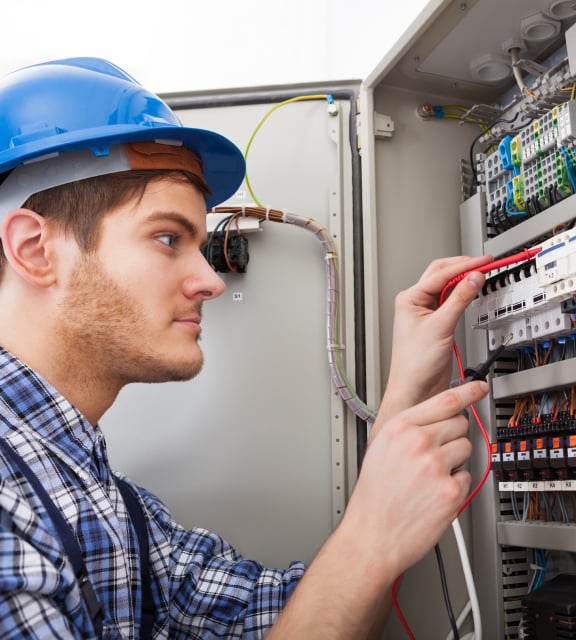
We Support 40,000+ Enterprise Locations
A Rock-Solid Foundation For Your Network Cabling Infrastructure
Network cabling is the last area where you want to cut corners. We’ll manage all aspects of your network or telecommunications cabling installation project, whether it’s a remodel or an entirely new construction.
Future-Proof Your Network With Our Structured Wiring
With TailWind as your strategic partner for everything from design to boots-on-the-ground support, you’ll never have to worry about wiring for your enterprise.

Our Structured Cabling & Network Cabling Services
Our structured cabling services cover every layer of your physical network, whether you need to relocate branches, open a new headquarters, run fiber between buildings, or bring a remodel up to standard.
With unbiased advice and end-to-end accountability, a single team of structured cabling experts handles your network cabling installation from design through testing and documentation, so you get the same result at every location.
Copper Data Cabling
We design and install Cat5e and Cat6 Ethernet cabling for workstations, phones, POS systems, cameras, and every other device your business runs on. Each run is terminated, labeled, and tested to TIA-568 standards before we hand it over.
Fiber Optic Cabling
From backbone runs between floors to links between buildings, our structured cabling team installs, terminates, and certifies singlemode and multimode fiber. OTDR and insertion-loss results are documented for every link, so you have a performance baseline from day one.
Outside Plant (OSP) Cabling
When your network spans a campus or several buildings, we plan and install the outside plant cabling that ties them together, with every run properly protected and grounded between buildings.
Wireless Access Point Cabling
Reliable WiFi starts with the cable behind every access point. We run and terminate the cabling your access points need and pair it with WiFi surveys, so each access point lands where your coverage actually requires it.
Telecom Rooms & Demarc Extensions
We build out telecommunications rooms, equipment rooms, and IDFs with organized racks and cable management, and our demarc extensions carry carrier circuits from the point where they enter your building to the room where your equipment sits.
Moves, Adds, Changes & Break/Fix Support
Networks keep changing after go-live. Our field services technicians handle moves, adds, and changes, trace and repair faulty runs, and add new lines as a location grows, so cabling quality stays consistent across your entire enterprise.

Request A Quote Today
Answer a few questions and we’ll build your custom quote for structured cabling.
Why Choose TailWind For Structured Cabling Installation
Many structured cabling companies are built to wire a single building. TailWind is built for networks that span dozens or hundreds of sites, with one team accountable for the result at every one of them.
- One standard everywhere: We help you define a cabling standard, from cable types and cabinets to labeling, and apply it at every site, as we did for a national retailer across all 85 of its stores.
- Coverage where you need it: Responsive on-site service from more than 3,000 dispatch points across the U.S. and Canada.
- Speed at scale: For one fast-dining chain, we completed system installs, including cabling and wireless access points, at 400+ locations in 90 days, finishing 10 days ahead of schedule.
- Complete accountability: From design and installation to testing and ongoing support, so nothing slips between vendors.
Need cabling as part of a larger nationwide rollout? We coordinate both under one plan, so every site is ready for the equipment that follows.

3 Simple Steps For A Structured Cabling System
To make this a smooth experience for you, we've honed our process for becoming a TailWind customer down to 3 easy steps.
Ready To Take The First Step?
Use the calendar below to set up your 30-minute connect call.
What Is Structured Cabling?
Structured cabling uses distribution areas and provides flexible, standards-based connections to manage how different network components connect to and comprise your network. With structured cabling, network components are directly connected to a communication backbone instead of to another component on the network.
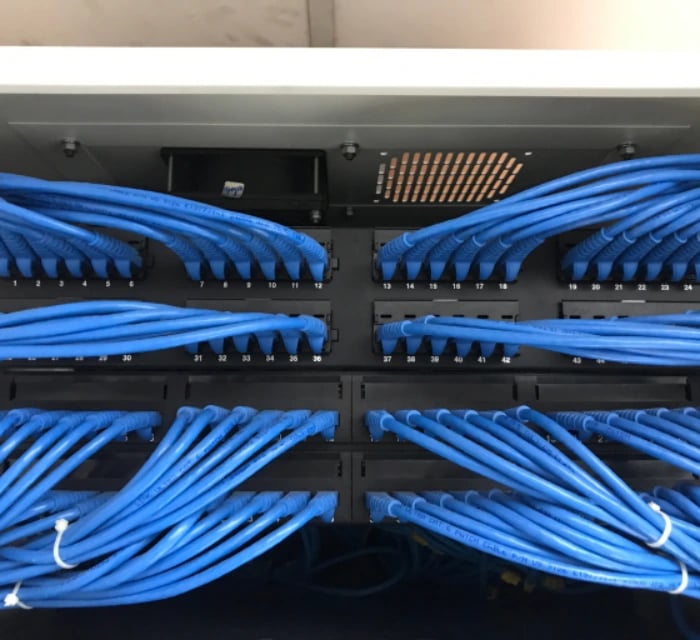
The Benefits Of Structured Cabling Systems
Traditional point-to-point cabling connects one device directly to the next. That works for a handful of connections, but as a network grows it becomes tangled, hard to trace, and costly to maintain. A structured cabling system connects every component to an organized backbone instead, which delivers clear benefits for growing businesses:
- Less Downtime: Organized, labeled runs make faults faster to find and fix, and built-in redundancy keeps one failure from taking a location offline.
- Easier Growth: New devices, moves, and expansions plug into the existing system instead of requiring new wiring.
- Lower Long-Term Costs: A standards-based system is easier for IT teams to maintain and supports new technology without a full re-cable.
- Consistency Across Sites: For multi-location businesses, one cabling standard means every site performs, and is supported, the same way.

How To Choose A Structured Cabling Company
Most structured cabling contractors can pull cable. Far fewer can deliver the same quality at every location you operate. Before you sign with any provider, ask a few direct questions.
-
Can they cover all of your sites, not just the major metros?
-
Do they test and certify every run, and will you receive the results?
-
Will you get labeling and as-built documentation, or just an invoice?
-
Is there one point of contact who owns the project from survey to close-out?
-
Can they support moves, adds, changes, and repairs after the install is done?
TailWind was built to answer yes to all five. If a structured cabling company can't speak to those points, it may not be ready for a multi-site footprint.
Structured Cabling Services FAQs
Our experts have answered the most common questions we hear about structured cabling solutions.
What is the difference between structured cabling and point-to-point cabling?
Point-to-point cabling connects each device directly to another device with its own dedicated cable. It is simple for a few connections but becomes hard to manage as a network grows. A structured cabling system connects devices to patch panels and a central backbone through standardized pathways, so moves, adds, and troubleshooting are faster and the network can scale without rewiring.
What are the 6 components of structured cabling?
- Entrance facilities
- Equipment room
- Backbone cabling
- Telecommunications room
- Horizontal cabling
- Work area
Together, these components provide a repeatable framework for installing telecommunications cabling.
What is outside plant (OSP) cabling?
OSP cabling connects multiple sites and locations over a wide area network. They typically utilize fiber optic cabling due to its higher electromagnetic resistance, and its cables must be properly grounded and protected when buried underground between buildings. A properly installed OSP system ties together company locations and provides reliable data connections.
What are the data cabling types?
- Cat5e: An Ethernet cable that supports speeds up to 1 Gbps, common in older installations.
- Cat6: Supports 1 Gbps over standard runs and up to 10 Gbps over shorter runs of up to 55 meters, making it a common choice for new business installs.
- Fiber: Transmits data as light instead of electrical signals, supporting far more bandwidth over much longer distances, which makes it ideal for backbones and links between buildings.
- Coax: A shielded copper cable built to block signal interference, still used for video, broadband, and some legacy systems.
How much does structured cabling installation cost?
The cost of structured cabling installation depends on the number of drops, the cable category, the distance between equipment rooms and work areas, the building's construction, and whether fiber or outside plant work is involved. Testing, labeling, and documentation should be included in any quote you compare. TailWind builds a custom quote based on your sites and requirements.
Can TailWind install structured cabling at multiple locations?
Yes. Multi-location businesses are our focus. With more than 3,000 dispatch points across the U.S. and Canada, we install structured cabling to one consistent standard at every site, coordinated by a single team, whether you are cabling five locations or five hundred.
How long does a structured cabling installation take?
Timelines depend on the size of each site, the number of drops, building access, and whether work needs to happen after hours to avoid disrupting operations. For multi-site projects, locations can be scheduled in parallel. For one restaurant chain, TailWind completed installs, including cabling and wireless access points, at 400+ locations in 90 days.